Pharmacological Action
Butorphanol is a synthetic narcotic agonist-antagonist. It is centrally acting with activity at µ- and κ-opioid receptors.
In mammals, butorphanol has potent analgesic and antitussive properties.
Its partial antagonistic µ-receptor activity reverses the effects of more potent opioids, while its agonistic κ-receptor activity accounts for its strong analgesic effect.
Butorphanol lightens the plane of anaesthesia, alleviates opioid-induced respiratory depression and stimulates respiratory drive through its agonistic σ-receptor activity.
Pharmacokinetic and Pharmacodynamic Properties
The onset of the analgesic effect of butorphanol is approximately 15 minutes after IM administration, with duration of action ranging from 1–3 hours and an elimination half-life of 1,8–2,5 hours.
Pharmacokinetic properties vary between species, type and/or intensity of pain, dose and route of injection.
Butorphanol is metabolised in the liver by hydroxylation and its metabolites do not retain any analgesic activity.
Butorphanol is primarily excreted in the urine, with a small portion excreted in bile and eliminated in the faeces.
Butorphanol inhibits transmission of nociceptive stimulation in the dorsal horn of the spinal cord.
This activates descending inhibitory pathways, inhibits supraspinal afferent pathways and reduces the release of neurotransmitters in the spinal cord.
Indications
BUTADYNE 50 is indicated for use in wildlife animals for:
- Pain control, including perioperative and visceral pain
- Sedation
- Reversal of opioid-induced respiratory depression
- Partial reversal of opioid anaesthesia in larger species to allow walking under heavy sedation
- Anaesthesia and neuroleptanalgesia when used in combination with α2-adrenergic agonists and/or more potent opioids
Controlled clinical trials with BUTADYNE 50 have only been conducted in blue wildebeest and blesbok.
Contraindications
None recorded.
Warnings
Caution should be taken when using BUTADYNE 50 in combination with other sedatives or analgesics, as these may produce additive effects.
BUTADYNE 50 should not be administered in wildlife animals treated with opioid antagonists within the past 24 hours.
BUTADYNE 50 is not recommended for somatic analgesia.
When used alone, BUTADYNE 50 causes apathetic sedation that may allow arousal when the animal is stimulated, which is a potential risk when working with dangerous species.
In wildlife animals with respiratory disease associated with increased mucous production, due to its antitussive properties, BUTADYNE 50 should only be used when the benefit outweighs the risk.
The safety of BUTADYNE 50 in pregnant and lactating wildlife animals has not been established.
BUTADYNE 50 residue studies have not been conducted in wildlife animals.
Carcasses of animals treated with BUTADYNE 50 within 90 days of slaughter should be discarded and are not considered safe for human or predator consumption.
Dosage and Directions for Use
BUTADYNE 50 dosing is dependent on species, body mass, condition of the wildlife animal being treated and the indication for use.
Administration by intramuscular or intravenous injection is recommended. Refer to the recommended dosage tables below.
The effects of BUTADYNE 50 may be reversed by administering TREXONIL (naltrexone HCl) at a ratio of 2 mg of TREXONIL for every 1 mg of BUTADYNE 50 used.
Side Effects and Special Precautions for Use
Common side effects of BUTADYNE 50 include lack of appetite and general sedation.
BUTADYNE 50 may decrease intestinal motility.
Pain on injection, mydriasis, disorientation, swallowing or licking and sedation have also been reported.
Due to its high concentration, accidental exposure to BUTADYNE 50 could have serious effects on humans.
Veterinarians are advised to take the following precautions when handling BUTADYNE 50:
- Do not work with the product when unaccompanied.
- Avoid using the product in devices where the solution is pressurised, for example blowpipes.
- Wear gloves when handling the product.
- Discard used needles in an appropriate sharps container immediately after use.
- In the event of topical exposure, rinse the affected area with copious amounts of water. Monitor for signs of toxicity including dizziness and vomiting.
- Should accidental injection occur, administer the antidote, naloxone, and seek medical attention immediately.
- Severe exposure may result in respiratory depression, coma and death. Monitor the airways and initiate CPR if needed.
Known Symptoms of Overdosage and Particulars of Its Treatment
Symptoms of toxicity in wildlife animals have not been established.
Management is symptomatic and supportive.
Identification
A clear, colourless sterile solution free from visible particulates.
Presentation
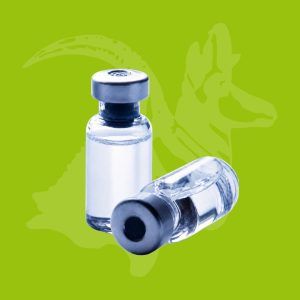
BUTADYNE 50 is supplied in a 10 ml amber glass vial, filled to 5 ml, with a grey rubber stopper and a white plastic cap.
Each vial is contained in an outer carton.
Storage Instructions
Store at or below 25 °C.
Do not refrigerate.
Protect from light.
KEEP OUT OF REACH OF CHILDREN AND UNINFORMED PERSONS.
Registration Number
19/1.3.1/14
Holder of the Certificate of Registration
Wildlife Pharmaceuticals (Pty) Ltd
38 Wilken Street
Rocky Drift
White River
1240
South Africa
Date of Publication
04 June 2024
Recommended BUTADYNE 50 Doses
The following recommendations are based on literature and field efficacy data.
Ungulates
| Species |
Mass (kg) |
Dose (mg/kg) ¥ |
Route |
Used in Combination With |
| Blesbuck |
70 |
0,07 |
IM |
0,04 mg/kg thiafentanil AND 0,2 mg/kg midazolam AND 1 mg/kg ketamine |
| African buffalo |
450–550 |
0,02 |
IV |
0,07–0,08 mg/kg etorphine AND 0,07–0,08 mg/kg thiafentanil AND 0,1 mg/kg azaperone |
| African buffalo |
80 |
0,125 |
IV |
0,06 mg/kg thiafentanil AND 0,25 mg/kg azaperone |
| Thomson’s gazelle |
11,5–20 |
0,4 |
IM |
5 mg/kg ketamine AND 0,04 mg/kg medetomidine |
| Giraffe |
800 |
0,09 |
IV |
0,013 mg/kg etorphine AND 0,1 mg/kg azaperone |
| Nubian ibex |
40–50 |
0,15 |
IM |
0,15 mg/kg medetomidine AND 0,15 mg/kg midazolam |
| Impala ¥ |
30–50 |
0,07–0,2 |
IM / IV |
0,02–0,04 mg/kg etorphine AND 0,02–0,04 mg/kg thiafentanil AND 0,08–0,1 mg/kg midazolam |
| Impala ¥ |
30–50 |
0,1–0,2 |
IM / IV |
0,04–0,05 mg/kg etorphine AND 0,08–0,1 mg/kg midazolam |
| Impala ¥ |
25–60 |
0,04–0,08 |
IM / IV |
0,03–0,04 mg/kg thiafentanil |
| Impala ¥ |
30 |
0,17 |
IM |
0,07 mg/kg thiafentanil AND 0,3 mg/kg azaperone |
| Nile lechwe |
28–64 |
0,2 |
IM |
0,3 mg/kg midazolam AND 0,2 mg/kg detomidine |
| Springbok |
4 (juvenile) |
0,5 # |
IM / IV |
|
| Black rhinoceros |
800–1000 |
0,003–0,009 |
IV |
0,004 mg/kg etorphine AND 0,04–0,05 mg/kg midazolam |
| White rhinoceros |
1800 |
15 mg |
IV |
3 mg etorphine AND 1,5 mg thiafentanil |
| White rhinoceros |
958–1292 |
20–31 mg |
IV |
2–3,1 mg etorphine AND 5–20 mg medetomidine |
| White rhinoceros |
800–2200 |
0,02 |
IM / IV |
0,002–0,003 mg/kg etorphine AND 0,02 mg/kg midazolam |
| White rhinoceros |
500–700 |
70–80 mg |
IM |
50–200 mg ketamine |
| White rhinoceros |
80 |
8 mg |
IM |
5 mg midazolam |
| White rhinoceros |
700 |
70 mg |
IM |
100 mg ketamine AND 10 mg midazolam |
| White rhinoceros |
1500–2300 |
70–120 mg # |
IM |
100–160 mg azaperone # |
| White rhinoceros calves |
< 2,5 years |
10 mg |
IM |
1,5–2 mg etorphine AND 1–2 mg detomidine AND 20 mg azaperone |
| White rhinoceros sub-adults |
2,5–7 years |
20 mg |
IM |
3–4 mg etorphine AND 2,5–4 mg detomidine AND 35–40 mg azaperone |
| White rhinoceros adults |
> 7 years |
20 mg |
IM |
4–5 mg etorphine AND 4,5–5 mg detomidine AND 40 mg azaperone |
| White rhinoceros calves |
< 2,5 years |
10–20 mg per 1 mg etorphine |
IM |
1,5 mg etorphine AND 10–40 mg azaperone |
| White rhinoceros sub-adults |
2,5–7 years |
10–20 mg per 1 mg etorphine |
IM |
2–3 mg etorphine AND 20–40 mg azaperone |
| White rhinoceros adults |
> 7 years |
10–20 mg per 1 mg etorphine |
IM |
3–4 mg etorphine AND 40 mg azaperone |
| Waterbuck |
250 |
0,003 |
IM |
0,02 mg/kg etorphine AND 0,02 mg/kg thiafentanil AND 0,3 mg/kg ketamine AND 0,07 mg/kg midazolam |
| Blue wildebeest |
80–160 |
0,06–0,12 |
IM / IV |
0,01 mg/kg etorphine AND 0,01 mg/kg thiafentanil AND 0,2–0,25 mg/kg azaperone |
| Blue wildebeest |
160 |
0,01 |
IM / IV |
0,01 mg/kg etorphine AND 0,01 mg/kg thiafentanil AND 0,3 mg/kg ketamine AND 0,03 mg/kg midazolam |
| Cape mountain zebra |
300 |
0,08 |
IM |
0,017 mg/kg medetomidine |
| Burchell’s zebra |
250–290 |
0,13 # |
IM (not in dart) |
0,1 mg/kg detomidine # |
| Plains zebra |
280–328 |
0,3–0,4 |
IM |
3–3,5 mg/kg ketamine AND 0,13–0,15 mg/kg medetomidine |
| Plains zebra |
250 |
0,012 |
IV |
0,008 mg/kg medetomidine AND 0,04 mg/kg midazolam |
Predators
| Species |
Mass (kg) |
Dose (mg/kg) ¥ |
Route |
Used in Combination With |
| African lion |
81–210 |
0,3 |
IM |
0,2 mg/kg midazolam AND 0,05 mg/kg medetomidine |
| Brown hyena |
38–44 |
0,15 |
IM |
0,05 mg/kg medetomidine |
| Caracal |
12 |
0,4 |
IM |
0,08 mg/kg medetomidine |
| Cheetah |
20–60 |
0,2 |
IM |
0,035 mg/kg medetomidine AND 0,15 mg/kg midazolam |
| Leopard |
35–90 |
0,3 |
IM |
0,2 mg/kg midazolam AND 0,06 mg/kg medetomidine |
| Serval |
7–16 |
0,2–0,4 |
IM |
1–8 mg/kg ketamine AND 0,03–0,08 mg/kg medetomidine |
| Spotted hyena |
40–60 |
0,15 |
IM |
0,05 mg/kg medetomidine |
| Spotted hyena |
30–60 |
0,4–0,5 |
IM |
0,06–0,15 mg/kg medetomidine AND 0,3–0,6 mg/kg midazolam |
| Wild dog |
20–25 |
0,15 |
IM |
0,05 mg/kg medetomidine |
Other Species
| Species |
Mass (kg) |
Dose (mg/kg) ¥ |
Route |
Used in Combination With |
| African elephants |
1600–5800 |
0,03 # |
IM |
0,009 mg/kg medetomidine # |
| African elephants |
3500–4300 |
14,7–16,2 µg/kg # |
IM |
14,7–16,2 µg/kg detomidine # |
Dosage Table Notes
¥ During immobilisation with a complete opioid agonist, the level of opioid anaesthesia can be decreased to the desired level by administering BUTADYNE 50 intravenously.
# Used for standing sedation.